
Buying Your First Home in Niagara Region: What you need to know before you start.
Buying your first home is exciting; but let’s be honest, it can also feel overwhelming. Between prices, interest rates, down payments, and all the advice out there, it’s hard to know where to start.
I work with first-time buyers in Niagara regularly, and many of them have the same questions and concerns. This post is meant to give you a clear and localized overview of what you should know before you begin your home search.
Why so many first-time buyers choose Niagara
Niagara continues to attract first-time buyers from the GTA and surrounding areas for a few key reasons:
Home prices are generally more approachable than many GTA markets (with some great options for first-time home buyers starting in the $400k- $500k range).
You get more space than the GTA—often a yard, parking, and basement
Lifestyle matters: wineries, trails, beaches, and walkable communities
Many buyers can still enter the market without stretching themselves thin
That said, Niagara is not one single market. Conditions can vary a lot depending on the city, neighbourhood, and property type.
Step one: understand what you can actually afford
Before browsing listings, get a realistic sense of your buying power.
Here’s how to do this:
Speak with a mortgage professional early
Understanding your maximum purchase price and your comfort level
Factoring in monthly costs beyond the mortgage
First-time buyers often focus only on the purchase price, but it’s just as important to plan for:
Property taxes: Often $200–$400/month for properties under $500k. Tip: Newer homes have higher property taxes.
Utilities: Often ranging from $200–$400 per month, depending on property type and your usage.
Insurance: Often ranging from $100–$200 per month, depending on property type and location.
Maintenance and repairs: Wide range, depending on the age and condition of the property.
Condo fees (if applicable)
Being comfortable long-term matters more than qualifying for the absolute maximum.
Down payment basics
For most first-time buyers, the minimum down payment depends on the purchase price:
$500,000 or less: 5% of the purchase price.
$500,001 to $1,499,999: 5% on the first $500,000 + 10% on the remaining balance.
$1.5 Million+: 20% of the purchase price.
Many buyers are surprised to learn they don’t need 20% down to buy; though putting less than 20% down does mean mortgage insurance, which should be part of the discussion with your lender.
Also important: your down payment doesn’t have to come only from savings. It can also come from:
RRSPs (via the Home Buyers’ Plan)
Gifts from immediate family
A combination of sources
Planning this early avoids delays later.
Choosing the right property type for your first home
In Niagara, first-time buyers typically consider one of three options:
Condos
Lower purchase price
Less maintenance
Monthly condo fees to budget for
Great for buyers who want simplicity or are buying solo.
Townhomes
A balance of space and price
Often newer builds
May still have maintenance fees
Popular with couples and young families.
Detached homes
More space and privacy
Higher price point
Maintenance is fully on you
Best for buyers who want long-term flexibility and room to grow.
There’s no “right” choice; just what fits your lifestyle and budget.
Location matters
One of the biggest mistakes first-time buyers make is focusing only on the house and not the location.
In Niagara, neighbourhood choice affects:
Resale value
Commute times
Noise and traffic
Long-term appreciation
When I’m helping first-time buyers, we talk through:
Where you work now and realistically in the future
The quality neighbourhoods
School plans, even if kids aren’t immediate
How long you plan to stay
Your first home doesn’t have to be perfect, but it should make sense for your life.
The offer process
When you find the right home, preparing ahead of time is very helpful.
That means:
Having financing in place
Understanding conditions (financing, inspection, etc.)
Knowing your walk-away number before emotions kick in
The goal is to buy the right home on the most favourable terms for you !
A smart and well-structured offer matters just as much as the price you pay.
Costs first-time buyers forget to budget for
Beyond the down payment, plan for:
Legal fees: Approximately $1,500 - $2,500
Land transfer tax: On a $500k home, your land transfer tax would be $6,475 and there would be a $4,000 rebate provided you are a first-time homebuyer which brings your net transfer tax to $2,475.
Home inspection: This costs about $600 for the average home in Niagara.
Moving costs: This depends on whether you are hiring a mover or renting a truck and doing it yourself.
Immediate fixes or furniture: Varies based on the property and the furniture you already have.
Planning for a realistic closing budget reduces stress and prevents surprises.
Timing the market vs. timing your life
With all the news and mixed advice these days, you may be thinking “Should I wait?”
The truth is, the best time to buy is when:
You’re financially ready
You plan to stay put for at least a few years
Monthly costs make sense for you
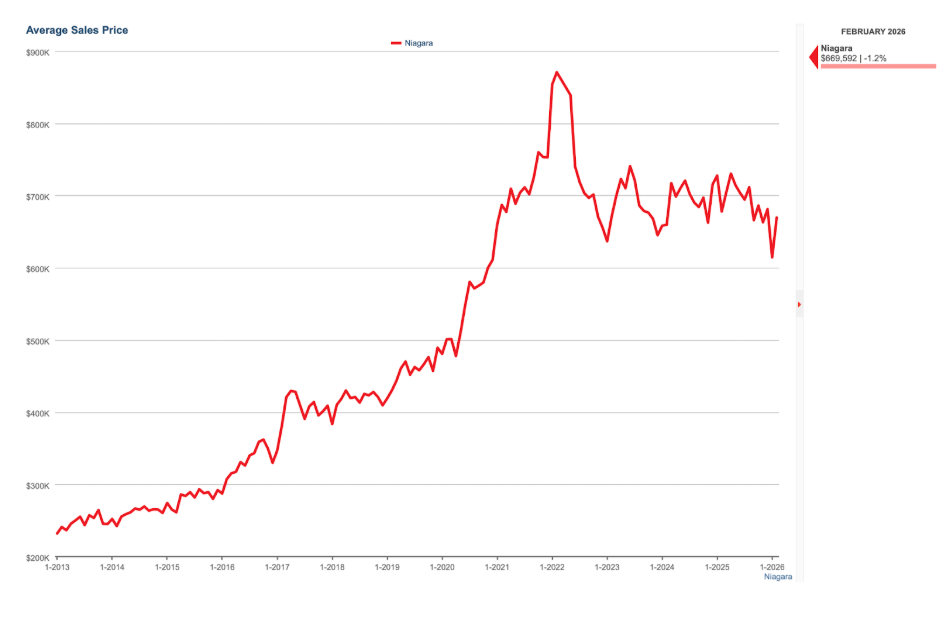
Chasing the “perfect” moment to buy can be exhausting and rarely works out as planned. A smarter approach is purchasing a home that fits your budget today and supports your future growth. In the long run, you benefit from appreciation, consistent mortgage paydown, and meaningful wealth creation.
Below is a graph of the average price point in Niagara over the past 13 years. Although there are years where home prices are volatile, prices do increase over time. Over the long run, owning a home is a great investment.
Final thoughts for first-time buyers
Buying your first home in Niagara is a big step; but it doesn’t have to be overwhelming.
With the right information, realistic expectations, and proper guidance, the process becomes much clearer and far less stressful.
If you’re thinking about buying your first home and want to talk through your options, timelines, or even just where to start, feel free to reach out. I’m always happy to answer questions with no pressure or obligation.
